Loan Origination Technology: How AI Is Transforming Loan Processing


Loan origination technology is the software layer that carries a loan from application to funding — capturing data, verifying documents, scoring risk, underwriting, and disbursing. Artificial intelligence is now reshaping every step of that journey. By reducing manual intervention and leveraging data-driven insights, AI-driven loan processing can make lending faster, more secure, and more accessible for both lenders and borrowers.
This guide breaks down where AI adds value across the loan lifecycle, what separates the best loan origination systems from the rest, and how to evaluate a platform for your own book of business.
What is loan origination technology?
Loan origination technology (sometimes called a lending origination system, or LOS) is the end-to-end system lenders use to originate and manage loans. A modern platform digitizes the full workflow — application intake, identity and income verification, credit decisioning, underwriting, approval, and funding — and increasingly uses AI and machine learning to automate the decisions that once required manual review. The result is shorter approval times, tighter risk controls, and a smoother borrower experience.
How AI transforms each stage of loan processing
1. Application Processing
- Automated document handling: AI can scan, read, and categorize loan application documents, verifying identity and income automatically. Optical Character Recognition (OCR) extracts data from tax returns, bank statements, and pay stubs, speeding up intake.
- Credit scoring and risk assessment: AI algorithms analyze credit histories, transaction patterns, and alternative data to assess creditworthiness — helpful for applicants with limited traditional credit files. (Any use of alternative data should be reviewed for fair-lending compliance.)
- Fraud detection: AI models flag fraudulent activity by spotting inconsistencies and suspicious behavior in real time.

2. Loan Underwriting
- Automated Decision-Making: Using historical data, machine learning, and statistical models, AI predicts a borrower's likelihood of default, underwrites quickly, and improves decision accuracy. This is where automated credit decisioning does the heaviest lifting — replacing slow, inconsistent manual reviews with fast, repeatable logic.
- Customizable Loan Offers: Based on a borrower's risk profile, the system can generate personalized terms (rate, tenure) optimized for both borrower and lender.
3. Loan Servicing
- Customer Support Chatbots: AI assistants offer borrowers 24/7 help on payments, balances, and account details, handling routine queries and escalating complex issues to human agents.
- Predictive Analytics for Defaults: By reading repayment patterns and early-warning signs, AI can surface likely delinquencies so lenders can offer proactive solutions such as restructuring or refinancing.
4. Compliance and Regulatory Adherence
- Automated Compliance Checks: AI reviews applications against legal and policy standards, helping keep each loan aligned with regulations such as fair-lending rules and data-privacy requirements.
5. Loan Approval Time Reduction
- Real-Time Approvals: AI-driven workflows can enable same-day decisions for certain loan types — valuable for smaller loans and personal financing where speed matters most.
6. Customer Personalization and Experience
- Tailored Offers: AI uses customer data to present relevant loan offers and recommend products that fit an individual's history, improving conversion and satisfaction.
7. Portfolio Management
- Risk Monitoring: AI helps lenders watch portfolios in real time, flagging shifts in market conditions or borrower behavior.
- Dynamic Pricing: Algorithms can adjust rates based on market data, risk tolerance, and borrower profile to optimize returns.

What to look for in the best loan origination system
Because "AI-powered" now appears on nearly every vendor's site, the differences that matter are practical. When comparing the top loan origination systems, weigh these criteria:
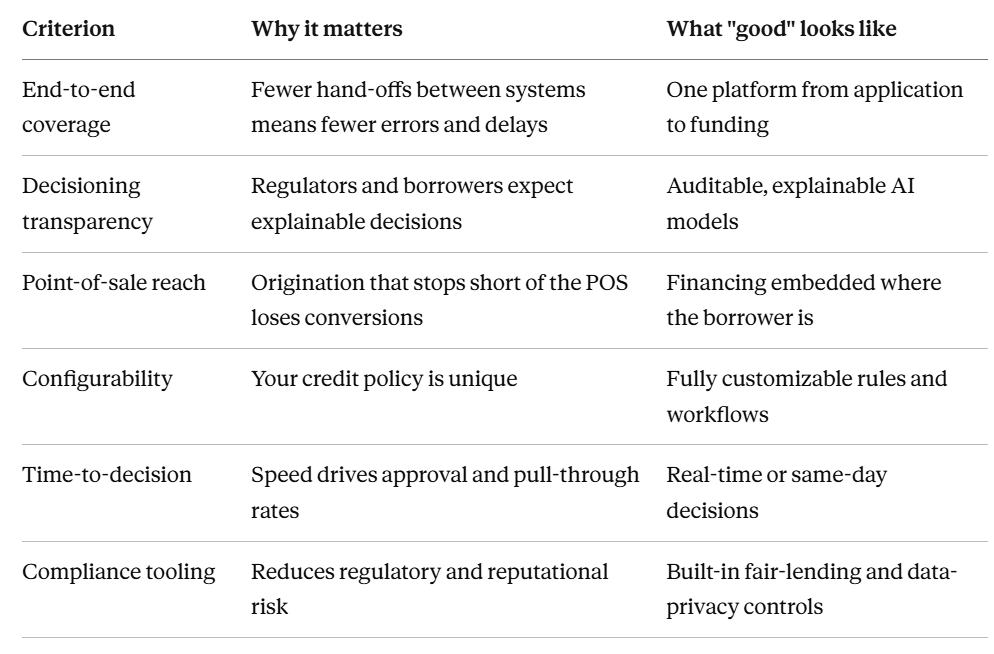
If you want a single system that covers this entire checklist, FinMkt's end-to-end loan origination platform is built to originate, decision, and fund loans in one streamlined workflow.
For a deeper look at specific angles, see our related guides on streamlining the loan origination process and moving toward cloud-based loan origination.
Frequently asked questions
What is a lending origination system?
A lending origination system is the software lenders use to originate and manage loans end to end — intake, verification, decisioning, underwriting, approval, and funding. Modern systems add AI to automate the steps that once needed manual review.
How does AI speed up loan approvals?
AI automates document handling, credit scoring, and underwriting, so applications that once took days can be decisioned in minutes — enabling same-day approvals for many loan types.
What are the top loan origination systems using AI for?
Primarily automated document processing, credit decisioning, fraud detection, predictive servicing, and dynamic portfolio management.
Is AI in loan processing compliant with lending regulations?
It can be, when models are explainable and the workflow includes fair-lending and data-privacy checks. Explainability and auditability are essential when evaluating any AI-driven platform.
The bottom line
By reducing manual intervention and leveraging data-driven insights, AI has the potential to make loan processing faster, more secure, and more accessible. The lenders pulling ahead are those adopting loan origination technology that unifies the whole journey rather than bolting AI onto isolated steps.
See how FinMkt's end-to-end loan origination platform brings application, decisioning, and funding into one workflow — or reach us at info@finmkt.io to talk through your use case.